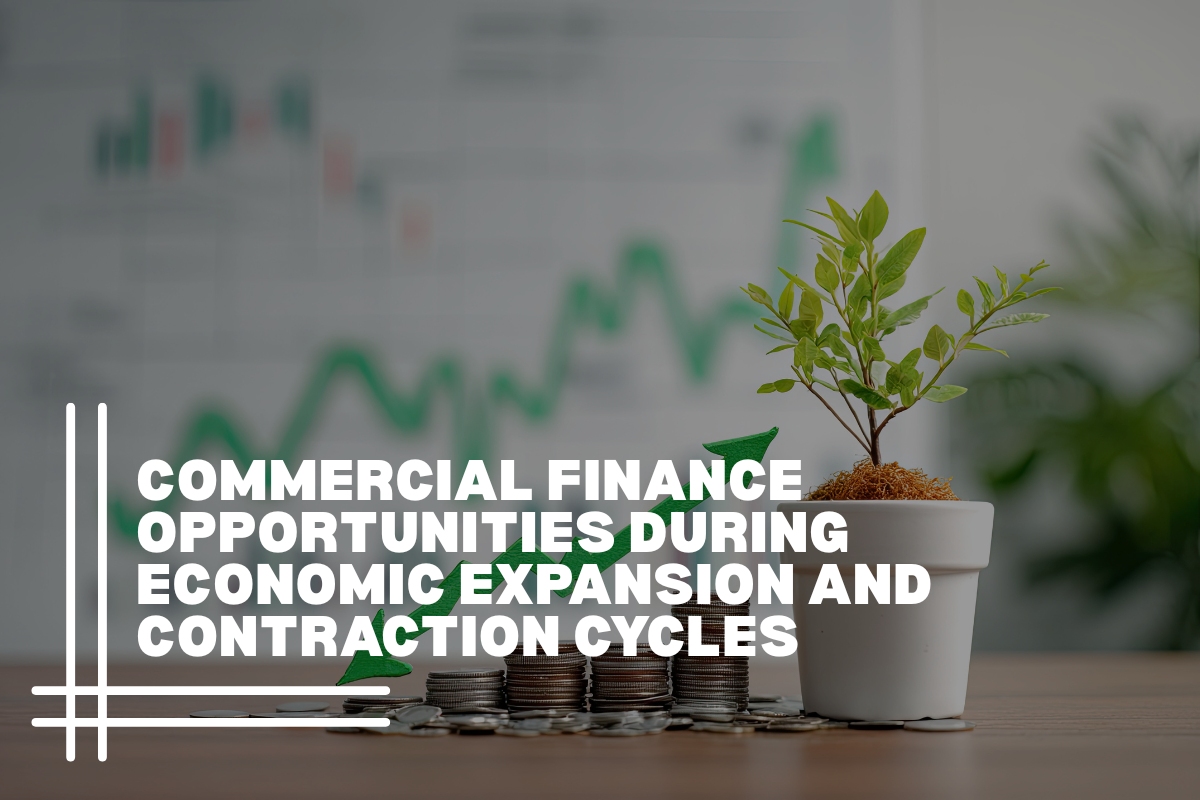
Economic cycles alternate between periods of expansion and contraction, shaping business confidence, investment behavior, and access to capital. Commercial finance—covering loans, credit facilities, leasing, and structured financing—plays a critical role in helping businesses navigate these fluctuations. While expansion and contraction phases present different risks, each cycle also creates distinct commercial finance opportunities for businesses, lenders, and investors who understand changing market dynamics.
Understanding Economic Expansion and Contraction Cycles
Economic expansion is characterized by rising GDP, increased consumer spending, higher employment levels, and growing business activity. During this phase, companies expand operations, invest in new projects, and seek financing to support growth. In contrast, economic contraction occurs when economic activity slows, demand weakens, unemployment rises, and businesses focus on survival, efficiency, and risk management.

Commercial finance adapts to both cycles by shifting priorities—from growth-oriented funding during expansion to stability-focused financing during contraction.
Commercial Finance Opportunities During Economic Expansion
During periods of economic growth, demand for commercial finance rises sharply. Businesses seek capital to expand production, enter new markets, invest in technology, and acquire competitors. This creates opportunities for lenders to offer term loans, working capital financing, equipment leasing, and project finance solutions.
Expansion cycles also encourage innovation in financial products. Banks and non-banking financial institutions introduce flexible credit lines, growth capital loans, and tailored financing for startups and small enterprises. With improved cash flows and stronger balance sheets, borrowers are generally less risky, allowing lenders to expand their portfolios profitably.

For investors, economic expansion opens opportunities in private credit, commercial real estate finance, and infrastructure funding. Rising asset values and stronger repayment capacity improve returns while supporting long-term economic development.
Risk Appetite and Credit Availability in Expansion Phases
In expansionary periods, risk appetite tends to increase. Financial institutions are more willing to lend due to lower default rates and optimistic economic forecasts. Credit becomes more accessible, interest rates may remain moderate, and underwriting standards can become more flexible.
This environment benefits businesses with solid growth plans but also requires disciplined risk assessment. Overextension during booms can expose both lenders and borrowers to vulnerabilities when the cycle reverses.
Commercial Finance Opportunities During Economic Contraction

Although contractions are often viewed as unfavorable, they also present unique commercial finance opportunities. During downturns, businesses prioritize liquidity, cost control, and debt restructuring. Demand increases for short-term working capital, refinancing solutions, trade finance, and asset-backed lending.
Financial institutions can support viable businesses by offering restructuring finance, bridge loans, and flexible repayment schedules. These solutions help companies survive temporary downturns while preserving long-term relationships with lenders.
Distressed asset financing and turnaround funding also become prominent during contraction phases. Investors and specialized lenders may acquire or finance undervalued assets, companies, or loan portfolios, positioning themselves for strong returns when economic conditions recover.
Defensive Financing Strategies and Risk Management
Contraction cycles emphasize risk management and defensive financing. Lenders focus on credit quality, collateral strength, and cash flow stability. Financing decisions are more conservative, but this discipline reduces long-term losses and strengthens financial systems.
For businesses, access to prudent commercial finance during downturns can mean the difference between closure and continuity. Companies that secure financing to maintain operations, retain skilled workers, and adapt business models are better positioned for recovery.
Long-Term Value Across Economic Cycles
The most successful commercial finance strategies recognize that expansion and contraction are interconnected phases of a continuous cycle. Lenders and businesses that plan across cycles—rather than reacting to short-term conditions—can unlock sustained value.
Diversified loan portfolios, countercyclical investment strategies, and strong borrower relationships allow financial institutions to perform well in both growth and downturn phases. Similarly, businesses that manage leverage carefully during expansions are more resilient during contractions and can capitalize on recovery opportunities faster.
Commercial finance opportunities exist throughout both economic expansion and contraction cycles, though they differ in nature and risk profile. Expansion periods favor growth financing, innovation, and portfolio expansion, while contraction phases create demand for liquidity support, restructuring, and distressed asset finance.
Understanding these dynamics enables businesses, lenders, and investors to make informed decisions, manage risk effectively, and achieve long-term financial sustainability regardless of economic conditions.
FAQs
What is commercial finance?
Commercial finance refers to funding solutions such as business loans, working capital, leasing, trade finance, and structured financing used by companies to support operations and growth.
How do economic expansions affect commercial finance?
Economic expansions increase demand for growth-oriented financing as businesses invest in expansion, technology, and new markets.
Are there finance opportunities during economic downturns?
Yes, downturns create opportunities in restructuring finance, working capital support, distressed asset funding, and countercyclical investments.
Why is risk management important across economic cycles?
Risk management helps lenders and businesses avoid overexposure during booms and maintain stability during downturns.
How can businesses prepare for changing economic cycles?
Businesses can prepare by managing debt responsibly, diversifying funding sources, maintaining liquidity, and aligning financing strategies with long-term goals.