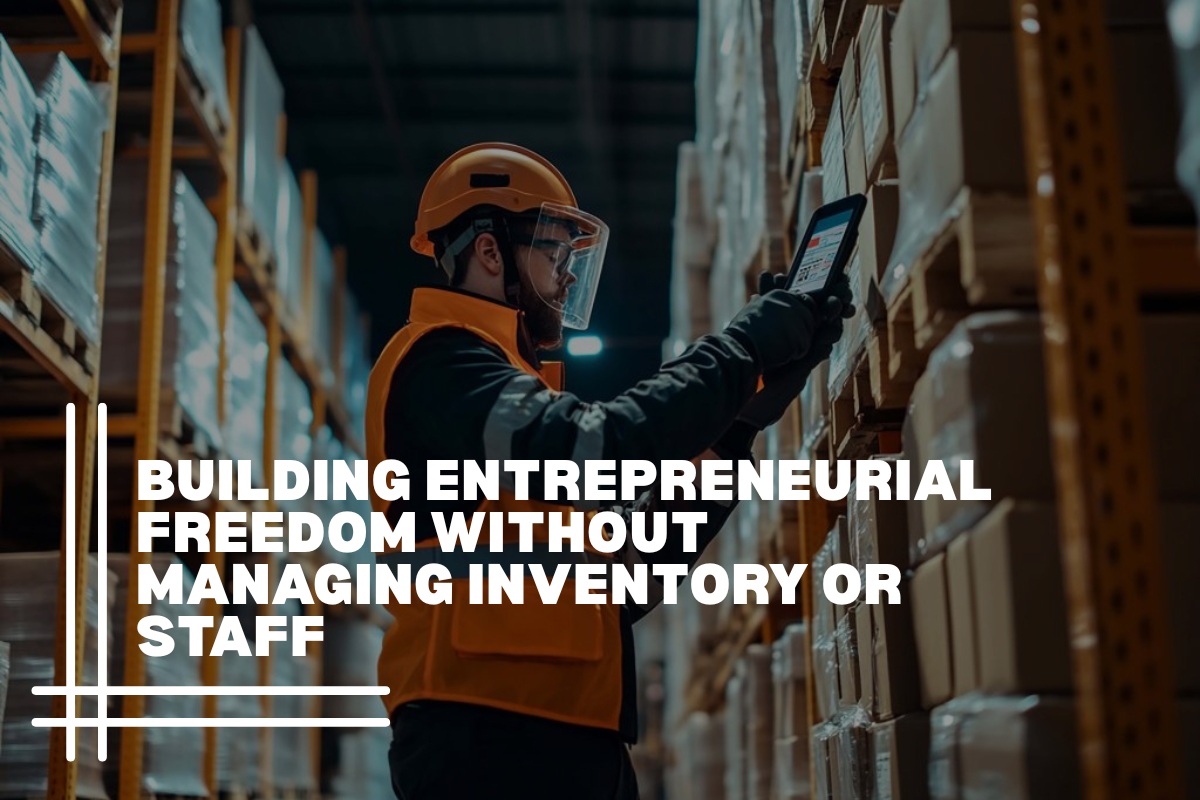
Entrepreneurship has long been associated with warehouses full of products, complex supply chains, and teams of employees to manage. While this traditional model can be effective, it is no longer the only path to building a successful business. Today, many entrepreneurs are achieving financial independence and lifestyle flexibility without managing inventory or staff. This modern approach to entrepreneurship emphasizes scalability, automation, and smart use of digital platforms.
Rethinking the Traditional Business Model
Conventional businesses often require significant upfront investment, ongoing operational oversight, and daily management responsibilities. Inventory must be purchased, stored, and tracked, while employees require hiring, training, and supervision. These factors can limit flexibility and increase financial risk.
In contrast, inventory-free and staff-free business models remove many of these constraints. By focusing on systems rather than physical assets, entrepreneurs can operate lean businesses that are easier to scale and manage. This shift allows founders to concentrate on strategy, creativity, and growth instead of routine operations.
Leveraging Digital Products and Services
One of the most effective ways to build entrepreneurial freedom is through digital products and services. Online courses, e-books, software tools, consulting, and subscription-based content can be created once and sold repeatedly with minimal ongoing effort. There is no physical stock to manage, and delivery is automated through digital platforms.
Service-based models such as coaching, freelancing, or online advisory services also eliminate inventory concerns. With the right systems in place, entrepreneurs can manage client relationships, scheduling, and payments without hiring full-time staff.
Utilizing Automation and Outsourcing
Automation plays a critical role in maintaining freedom while running a business. Tools for email marketing, customer relationship management, payment processing, and content delivery can handle tasks that once required dedicated employees. When systems are automated, the business continues to operate efficiently even when the entrepreneur steps away.
For tasks that cannot be automated, outsourcing provides a flexible alternative to hiring staff. Freelancers and contractors can be engaged on a project basis, allowing entrepreneurs to access specialized skills without long-term commitments or management responsibilities.
Embracing Platform-Based Business Models
Platform-based models enable entrepreneurs to connect buyers and sellers without owning products or employing staff. Examples include marketplaces, affiliate marketing, and drop servicing. In these models, the entrepreneur focuses on branding, marketing, and customer experience while fulfillment is handled by third parties.

This approach reduces operational complexity and financial risk while offering significant scalability. As demand grows, systems and partnerships absorb the increase without requiring proportional increases in workload.
Designing for Scalability and Lifestyle Freedom
True entrepreneurial freedom comes from designing a business that aligns with personal goals and lifestyle preferences. Inventory-free and staff-free models are inherently scalable because growth is not limited by physical resources or management capacity.
Entrepreneurs can choose when and where they work, making it easier to balance professional and personal priorities. This flexibility is especially valuable for those seeking location independence, reduced stress, or the ability to pursue multiple ventures simultaneously.
Managing Risk and Maintaining Control
Operating without inventory or staff also reduces financial and operational risk. There is less capital tied up in assets, fewer fixed costs, and greater adaptability to market changes. Entrepreneurs can test ideas quickly, pivot when necessary, and shut down underperforming projects with minimal loss.
Control remains firmly in the hands of the founder, as decision-making is not slowed by layers of management or logistical constraints. This agility is a key advantage in fast-changing markets.
Building Long-Term Value
While these models emphasize simplicity, they are not shortcuts to success. Building value still requires clear positioning, consistent quality, and trust with customers. However, by removing unnecessary complexity, entrepreneurs can focus on what truly drives growth: solving problems, delivering value, and building strong relationships.
Over time, inventory-free and staff-free businesses can become highly profitable assets that generate income with relatively low ongoing involvement.
FAQs
What types of businesses can operate without inventory or staff?
Digital product businesses, online services, consulting, affiliate marketing, and platform-based models can operate effectively without inventory or employees.
Is it realistic to scale a business without hiring staff?
Yes. Through automation, outsourcing, and digital systems, many businesses scale successfully without permanent staff.
Does this model require advanced technical skills?
Not necessarily. Many user-friendly tools and platforms make it possible to automate and manage operations with basic technical knowledge.
How does this approach reduce business risk?
It lowers fixed costs, minimizes upfront investment, and allows faster adaptation to market changes.
Can inventory-free businesses generate long-term income?
Yes. When built on strong systems and value-driven offerings, these businesses can produce sustainable and scalable income over time.