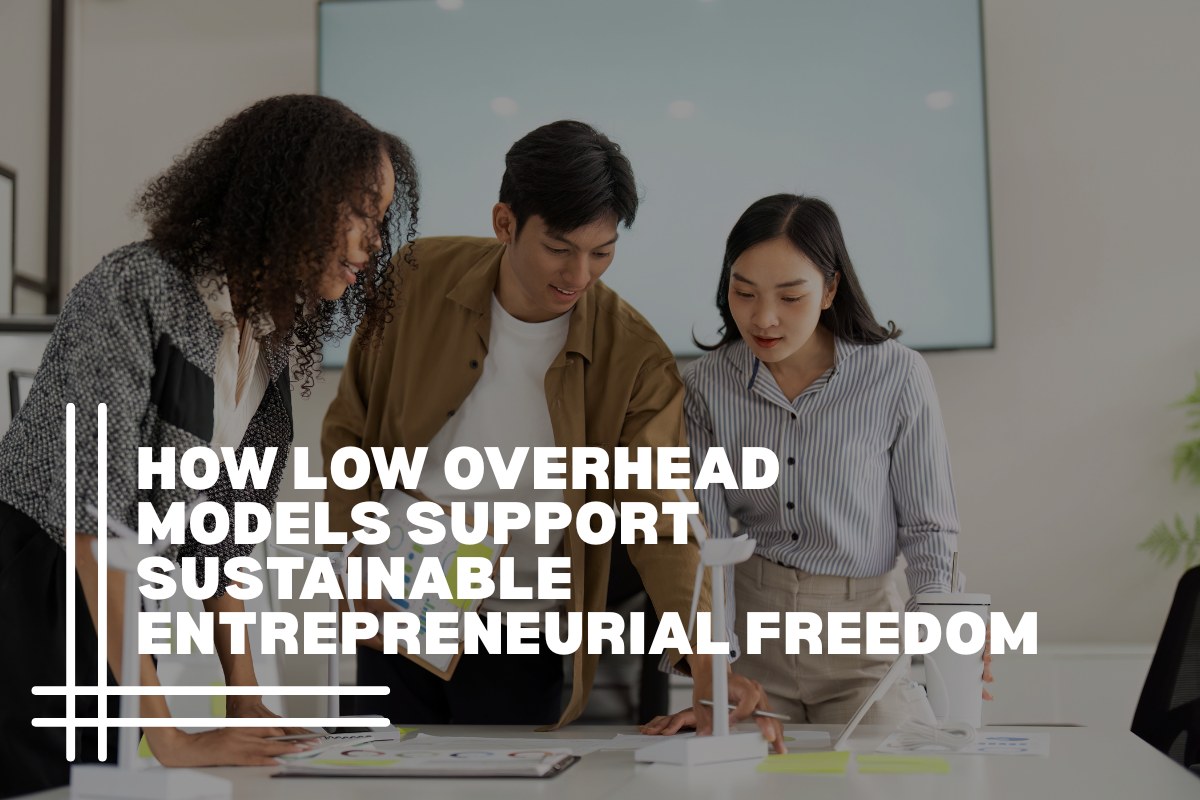
Entrepreneurial freedom is often misunderstood as simply leaving traditional employment or increasing income. In reality, true freedom is sustained by stability, flexibility, and control—especially during uncertain economic periods. Low overhead business models are one of the most effective ways to achieve this balance. By minimizing fixed costs and operational complexity, entrepreneurs gain resilience, optionality, and long-term independence rather than short-lived success.
Understanding What Low Overhead Really Means
Low overhead does not mean low quality or small ambition. It means designing a business that minimizes fixed expenses while maximizing adaptability.
Low overhead models typically reduce or eliminate:
- Office leases and physical locations
- Large payroll commitments
- Inventory and warehousing costs
- Heavy administrative infrastructure
Instead, they rely on expertise, systems, and flexible resources.
Lower Fixed Costs Reduce Financial Pressure
High fixed costs create pressure to generate constant revenue, often forcing entrepreneurs into reactive decision-making. Low overhead models reduce this pressure dramatically.

With fewer mandatory expenses, entrepreneurs can:
- Choose clients more selectively
- Avoid underpricing services
- Decline misaligned opportunities
- Focus on long-term value rather than short-term cash flow
Reduced pressure supports better judgment and sustainability.
Freedom Comes From Optionality, Not Just Income
Entrepreneurial freedom depends on having options. Low overhead models preserve optionality by keeping operating costs manageable.

This allows entrepreneurs to:
- Scale up or down as needed
- Adapt during economic shifts
- Take strategic breaks without business collapse
- Reinvest profits intentionally
Optionality is the foundation of long-term freedom.
Resilience Across Economic Cycles
Businesses with high overhead are often the first to struggle during downturns. Low overhead businesses are naturally more resilient.
Because expenses are flexible rather than fixed, entrepreneurs can:
- Absorb revenue fluctuations
- Adjust workload without layoffs
- Remain operational during uncertainty
This resilience reduces stress and supports career longevity.
Supporting Remote and Flexible Work Structures
Low overhead models align naturally with remote work. Without the need for physical offices or centralized operations, entrepreneurs gain location independence.
This supports:
- Work-from-home operations
- Geographic mobility
- Reduced commuting and time waste
- Better work-life integration
Flexibility becomes structural rather than situational.
Allowing Income to Reflect Value, Not Survival
When overhead is high, pricing decisions are often driven by survival needs. Low overhead models allow income to reflect expertise and value instead.
Entrepreneurs can:
- Price services based on outcomes
- Focus on quality over volume
- Build reputation-driven demand
This alignment improves both income stability and professional satisfaction.
Lower Risk Enables Ethical and Strategic Growth
High overhead can incentivize rushed decisions or unsuitable deals. Low overhead reduces this risk by removing urgency-driven behavior.
Entrepreneurs are better positioned to:
- Grow intentionally
- Maintain ethical standards
- Avoid overextension
- Build trust-based relationships
Ethical growth is more sustainable than aggressive expansion.
Scalability Without Fragility
Low overhead businesses can scale through systems, partnerships, and selective hiring rather than fixed infrastructure.
This means growth does not automatically increase risk. Entrepreneurs can expand capacity without locking themselves into expenses that are difficult to reverse.
Preserving Time and Mental Bandwidth
High overhead businesses demand constant attention to expenses, staffing, and logistics. Low overhead models free mental bandwidth.
Entrepreneurs gain:
- More focus on strategy and creativity
- Reduced operational stress
- Greater clarity in decision-making
Mental freedom is a critical but often overlooked component of entrepreneurial freedom.
Building Businesses That Serve Life, Not Consume It
Sustainable entrepreneurial freedom is about designing businesses that support personal priorities rather than dominate them.
Low overhead models allow entrepreneurs to:
- Maintain balance without sacrificing ambition
- Adjust intensity across life stages
- Build long-term careers without burnout
The business becomes a tool, not a trap.
Long-Term Independence Over Short-Term Expansion
Many businesses fail not because they lack revenue, but because their cost structures are too rigid. Low overhead models prioritize independence over appearance of scale.
This approach supports:
- Longevity over rapid expansion
- Stability over volatility
- Control over constant growth pressure
Sustainable freedom is built slowly and intentionally.
A Foundation for Enduring Entrepreneurship
Low overhead models are not about limitation—they are about leverage. By reducing fixed costs and increasing flexibility, entrepreneurs gain the freedom to make better decisions, adapt to change, and build careers that last.
In an unpredictable world, sustainable entrepreneurial freedom is supported not by size, but by simplicity, discipline, and thoughtful design.
Frequently Asked Questions (FAQ)
Q1. Does low overhead limit business growth?
No. It allows growth to occur more strategically and with less risk.
Q2. Are low overhead businesses less professional?
No. Professionalism is defined by execution and value, not physical infrastructure.
Q3. Is low overhead suitable for long-term careers?
Yes. It supports resilience, adaptability, and reduced burnout.
Q4. Can income still scale with low overhead?
Yes. Income can scale through expertise, systems, and relationships rather than fixed costs.
Q5. Is low overhead better during economic uncertainty?
Yes. Flexible cost structures perform better when conditions change.