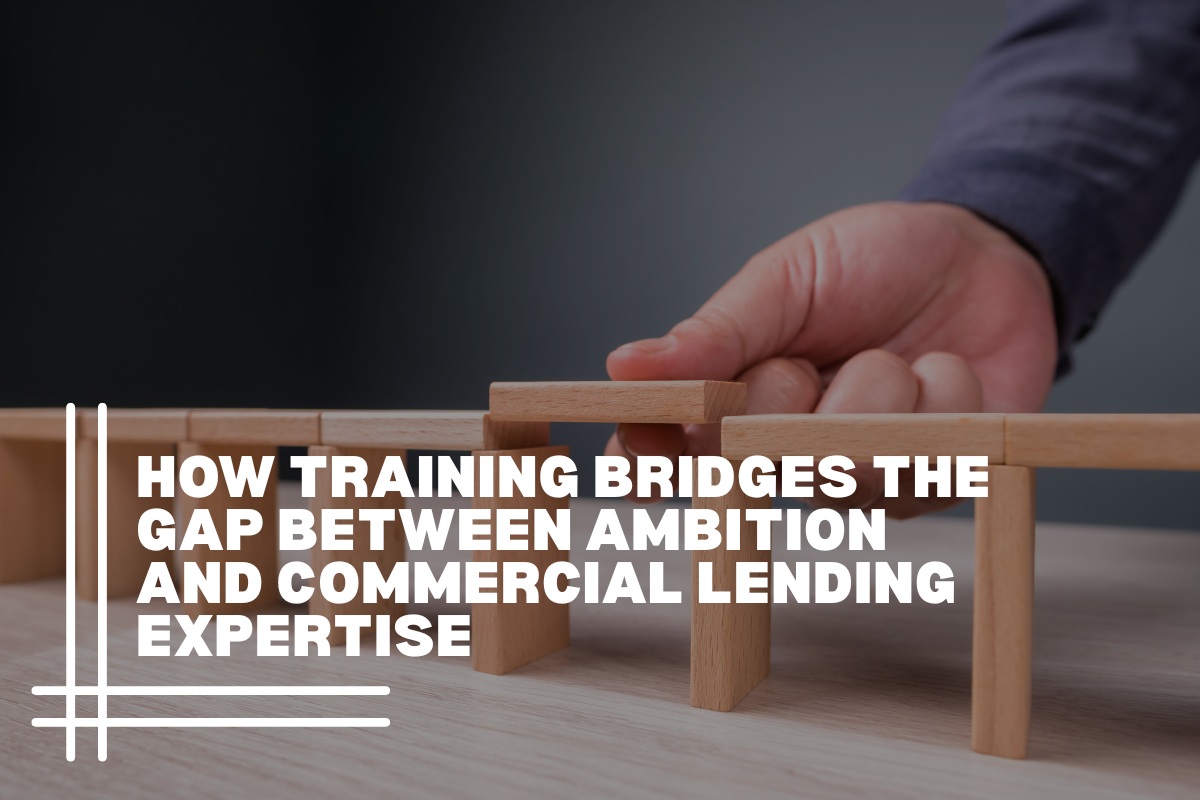
Many aspiring professionals enter commercial lending with strong ambition, confidence, and entrepreneurial drive. However, ambition alone is not enough in an industry where decisions affect real businesses, cash flow, and long-term viability. The gap between wanting to succeed in commercial lending and being capable of doing so responsibly is significant. Training is the mechanism that closes that gap, transforming motivation into measurable expertise.
Ambition Without Structure Creates Hidden Risk
Ambition is valuable, but without structure it can lead to overconfidence and costly mistakes. Commercial lending involves complex variables such as cash flow behavior, risk exposure, deal structuring, and capital source alignment.

Without training, ambitious individuals may:
- Misjudge deal viability
- Rely on surface-level indicators
- Overpromise outcomes
- Underestimate long-term consequences
Training provides structure that channels ambition into informed action.
Training Converts Interest Into Professional Competence
Commercial lending expertise is not intuitive. Training provides a clear framework for understanding how lending decisions are actually made and executed.
Through structured learning, individuals move from:
- Curiosity → comprehension
- Confidence → capability
- Motivation → judgment
This conversion is what separates professionals from participants.
Learning How Deals Really Work Behind the Scenes
Many newcomers only see the outcome of commercial lending deals, not the analysis and structuring behind them. Training exposes the full process.

Participants learn:
- How deals are evaluated
- Why some transactions fail despite good intentions
- How lenders assess risk
- What makes structures sustainable
Understanding the full lifecycle of a deal is essential to expertise.
Cash Flow Knowledge Turns Ambition Into Accuracy
Ambition often focuses on deal volume or size. Training redirects focus toward accuracy—starting with cash flow.
Training teaches how to:
- Interpret financial statements correctly
- Normalize income and expenses
- Identify repayment capacity
- Spot early warning signs
This accuracy protects both the borrower and the professional.
Structured Training Builds Sound Judgment
Commercial lending expertise is ultimately about judgment. Training accelerates judgment development by exposing learners to real-world scenarios, patterns, and consequences.
Rather than learning only through mistakes, training allows individuals to:
- Learn from proven frameworks
- Understand cause-and-effect relationships
- Anticipate outcomes before execution
Judgment built through training reduces avoidable errors.
Understanding Capital Sources Transforms Capability
Ambition often assumes capital is interchangeable. Training reveals that each capital source has unique criteria, expectations, and limitations.
Through training, individuals learn:
- Why deals fit some lenders and not others
- How to position opportunities correctly
- When to say no rather than force a deal
This understanding dramatically improves execution quality.
Training Reinforces Ethical Discipline
In commercial lending, ambition can tempt professionals to prioritize speed or fees over sustainability. Training reinforces ethical boundaries and long-term thinking.
It teaches:
- When declining a deal is the right decision
- How over-leverage damages businesses
- Why transparency builds credibility
Ethical discipline is a hallmark of true expertise.
Confidence Becomes Earned, Not Assumed
Training replaces untested confidence with earned confidence. This distinction matters deeply in high-responsibility fields.
Well-trained professionals:
- Communicate more clearly
- Set realistic expectations
- Ask better questions
- Handle pressure with composure
Earned confidence strengthens trust and relationships.
Training Shortens the Expertise Timeline
Without training, expertise may take years to develop through trial and error. Training compresses this timeline by providing proven knowledge upfront.
This allows aspiring professionals to:
- Enter the market sooner
- Avoid early reputational damage
- Build pipelines more effectively
- Learn faster from real deals
Acceleration does not replace experience—it makes experience more productive.
From Ambition to Sustainable Execution
Ambition initiates the journey, but training determines whether that journey leads to success or frustration. In commercial lending, where consequences are real and lasting, preparation matters more than enthusiasm alone.
Training bridges the gap between desire and discipline, confidence and competence, and aspiration and execution.
Expertise Is Built, Not Assumed
Commercial lending expertise is built through education, repetition, and judgment—not ambition alone. Training provides the foundation upon which experience can compound.
For those serious about long-term success in commercial lending, training is not an optional enhancement—it is the bridge that turns ambition into professional credibility.
Frequently Asked Questions (FAQ)
Q1. Why isn’t ambition enough to succeed in commercial lending?
Because the industry requires technical analysis, judgment, and ethical responsibility beyond motivation alone.
Q2. How does training accelerate expertise development?
It provides frameworks, real-world insight, and risk awareness that reduce trial-and-error learning.
Q3. Can training replace experience?
No, but it makes experience far more effective and less costly.
Q4. Does training improve deal success rates?
Yes. Better analysis, structuring, and positioning increase sustainable deal outcomes.
Q5. Is training important even for confident entrepreneurs?
Especially so. Confidence without expertise increases risk in commercial lending.